
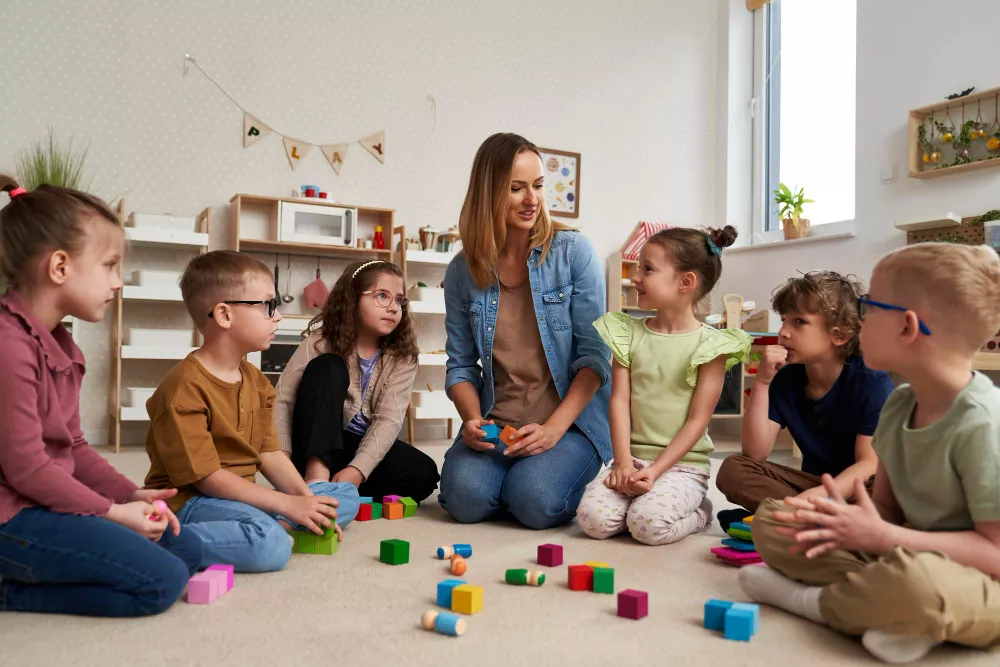
Group Therapy gives children a supportive space to learn, interact, communicate, and build confidence through structured activities with peers.
Some skills are easier to develop in a group than in one-to-one therapy. Group Therapy helps children practise communication, sharing, turn-taking, teamwork, emotional control, and social interaction in a natural setting.
Sessions are designed to feel engaging and enjoyable while still working toward meaningful developmental and behavioural goals.
Group Therapy may be helpful for children who experience:
Difficulty interacting with peers
Limited communication skills
Low confidence in social settings
Trouble sharing or taking turns
Difficulty following group instructions
Behavioural or emotional challenges
Attention and concentration difficulties
Social anxiety or withdrawal
Developmental delays
Difficulty adjusting to school or group environments
Activities are planned according to the age, abilities, and needs of the children in the group.
Sessions may include:
Interactive games
Team-based activities
Storytelling
Role play
Creative tasks
Movement activities
Communication exercises
Turn-taking games
Problem-solving tasks
Group discussions
Confidence-building activities
The therapist guides each activity and helps children participate at a comfortable pace.
Children learn many important skills by observing and interacting with others. A group setting allows them to practise:
Greeting and responding
Listening to others
Taking turns
Sharing materials
Asking for help
Expressing needs
Managing disagreements
Working as part of a team
These skills can gradually become easier to use at school, home, and in social situations.
Group Therapy also helps children understand and manage emotions in real-time situations.
They may learn how to cope with frustration, wait patiently, handle mistakes, respond appropriately to others, and express feelings more clearly.
This can support better emotional regulation and more positive social experiences.
Children who are hesitant in social settings may slowly become more comfortable when participating alongside peers in a supportive environment.
Small achievements such as answering a question, completing a group task, speaking in front of others, or helping a peer can strengthen confidence and independence.
Group Therapy creates opportunities to practise real-life skills rather than only discussing them.
Children can learn from therapists, observe peers, try new behaviours, receive encouragement, and immediately practise what they have learned.
This makes therapy practical, interactive, and closely connected to everyday life.
Groups may be organised around specific goals such as social skills, communication, emotional regulation, confidence, behaviour, movement, or developmental needs.
Activities are adjusted according to the group’s progress so each child can participate meaningfully while working toward individual goals.
Group Therapy helps children develop skills that support friendships, classroom participation, communication, confidence, and everyday independence.