
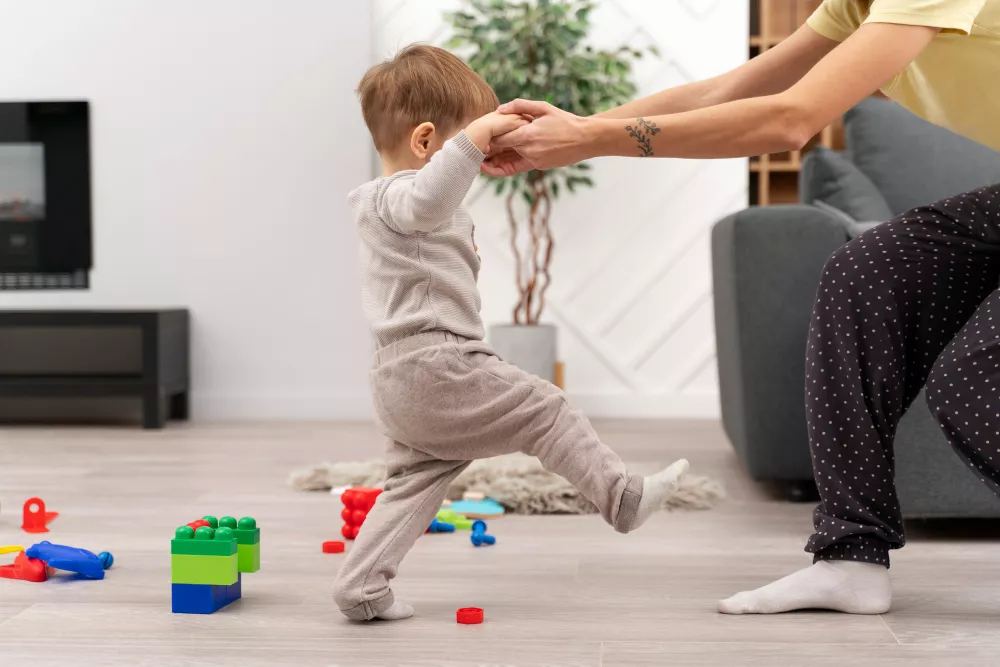
Child physiotherapy supports children in developing movement, strength, balance, coordination, and physical independence. Through age-appropriate exercises and personalised activities, therapy helps children improve their physical abilities and participate more comfortably in everyday life.
Every child develops at their own pace. Some children may need additional support to achieve motor milestones, improve muscle strength, develop balance, or coordinate their movements.
Our approach focuses on understanding each child’s physical abilities and developmental needs. Therapy activities are designed to be engaging, supportive, and suited to the child’s age, abilities, and individual goals.
Child physiotherapy may be beneficial when a child experiences:
Delayed motor milestones
Difficulty sitting, crawling, or walking
Poor balance and coordination
Muscle weakness
Low or high muscle tone
Difficulty maintaining posture
Challenges with movement and mobility
Delayed gross motor development
Difficulty with physical activities
Gait or walking abnormalities
Reduced strength and endurance
Movement difficulties associated with developmental conditions
Physiotherapy helps children build the physical skills needed for everyday movement and participation. Therapy may focus on:
Head and trunk control
Sitting and standing balance
Crawling and walking skills
Muscle strength and flexibility
Posture and body alignment
Coordination and motor planning
Mobility and functional movement
Improving walking patterns
Age-appropriate physical activities
Building endurance and confidence
The goal is to help children move more safely, comfortably, and independently.
Early movement experiences play an important role in a child’s physical development. When children experience delays in reaching milestones, physiotherapy can help identify their needs and provide appropriate activities to encourage progress.
Through guided movement, therapeutic exercises, and repeated practice, children can work towards improving their ability to roll, sit, crawl, stand, walk, and participate in age-appropriate activities.
Children benefit when movement skills are practised consistently in familiar environments. Parents and caregivers may receive guidance on simple activities that support development at home.
These strategies may focus on:
Encouraging age-appropriate movement
Practising balance and coordination
Supporting safe mobility
Improving posture
Building strength through play
Encouraging independent movement
Following home exercise programmes
Incorporating physical activities into daily routines
This helps reinforce the skills developed during therapy sessions.
Parents play an important role in a child’s physical development. Understanding how to encourage movement, practise exercises safely, and recognise developmental progress can make everyday support more effective.
Our goal is to help families feel confident in supporting their child’s movement and physical abilities through practical guidance and consistent encouragement.
Where needed, child physiotherapy can be coordinated with occupational therapists, speech and language therapists, paediatricians, behavioural therapists, and other professionals involved in the child’s care.
This collaborative approach helps support the child’s overall development while addressing individual physical and functional needs.
Physical development happens gradually, and every milestone matters. With appropriate therapy, regular practice, and family involvement, children can work towards improved strength, mobility, coordination, and greater independence in everyday activities.