
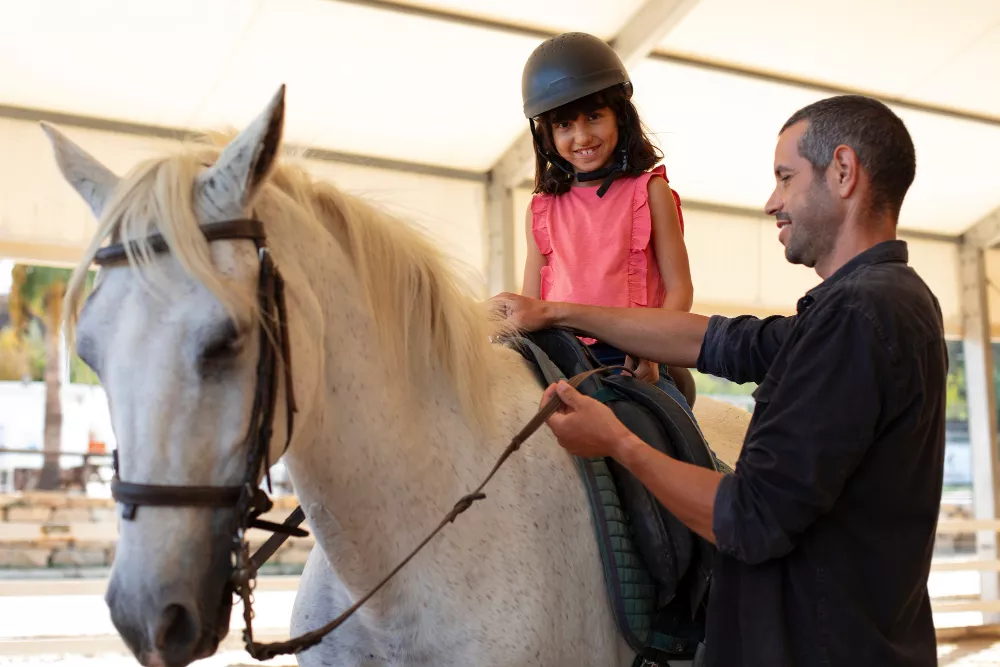
Equine Therapy combines guided interaction with horses and therapeutic activities to support physical development, emotional wellbeing, sensory regulation, and social confidence.
Equine Therapy is a structured therapeutic experience where carefully planned activities with horses are used to support developmental and rehabilitation goals.
For many children, the therapy feels enjoyable and natural rather than clinical. The movement of the horse provides rhythmic sensory input, while activities such as grooming, guiding, balancing, and riding encourage active participation.
This combination of movement, interaction, and responsibility can support both physical and emotional development.
Equine Therapy may be helpful for individuals who experience:
Delayed motor development
Poor balance or coordination
Reduced core strength
Postural difficulties
Sensory processing challenges
Limited body awareness
Low confidence or self-esteem
Difficulty managing emotions
Attention and concentration challenges
Social interaction difficulties
Communication concerns
Certain developmental or neurological conditions
Each session is planned according to the individual’s abilities, comfort level, and therapeutic goals.
Activities may include grooming the horse, touching and identifying different body parts, guided walking, supervised riding, reaching and stretching activities, balance tasks, following instructions, and simple interactive games.
These activities can be modified gradually as the individual becomes more confident and capable.
The natural movement of a horse gently challenges balance and posture. As the body responds to these movements, different muscle groups become active.
With regular participation, Equine Therapy may support:
Better balance and coordination
Improved core stability
Increased postural control
Greater body awareness
Improved gross motor abilities
Better movement planning
Developing a connection with a horse can be a meaningful experience. Horses respond naturally to body language, movement, and behaviour, which can encourage individuals to become more aware of their own emotions and actions.
Equine Therapy may support confidence, patience, responsibility, emotional regulation, and trust.
Sessions can also provide opportunities to practise listening, following instructions, communicating needs, taking turns, and interacting appropriately with therapists and others.
These experiences may help strengthen social participation and communication in everyday environments.
Some children may find traditional therapy settings difficult or repetitive. The outdoor environment and interaction with horses can make therapy feel more enjoyable and motivating.
When children are engaged and interested, they may participate more actively in therapeutic activities and develop skills in a natural and meaningful way.
Equine Therapy is not a one-size-fits-all programme. Activities are selected according to age, physical ability, developmental needs, sensory preferences, and individual goals.
When appropriate, it may complement physiotherapy, occupational therapy, counselling, behavioural therapy, or other rehabilitation services.