
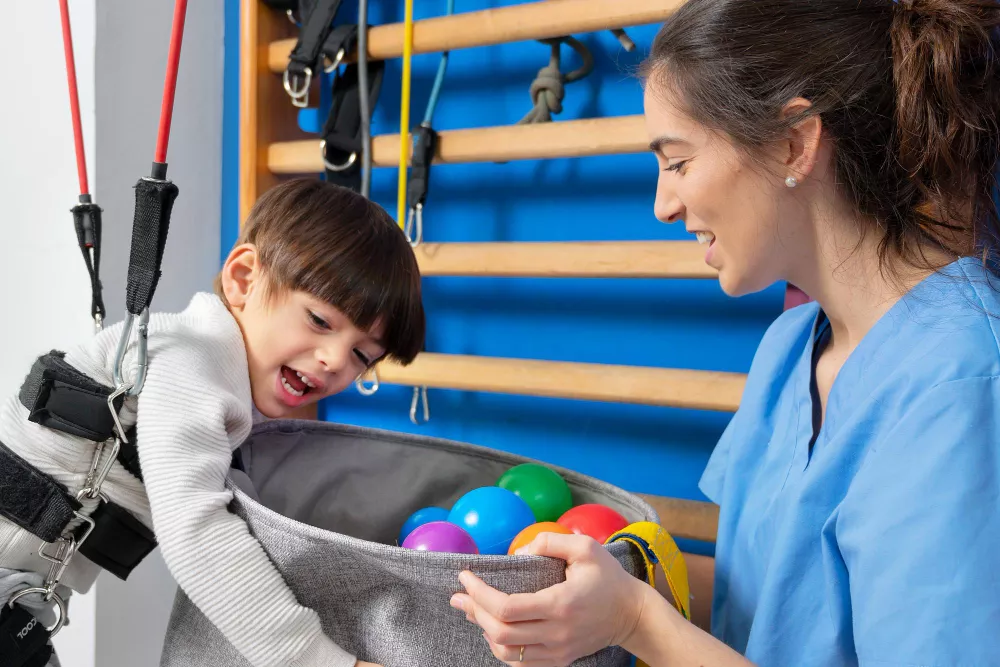
Occupational therapy helps children develop the skills they need to participate more comfortably and independently in everyday activities. Through purposeful activities and personalised strategies, therapy supports movement, coordination, sensory processing, self-care, learning, and participation at home, school, and in the community.
Every child develops at their own pace. Some children may find everyday activities such as dressing, eating, writing, playing, or following routines more challenging than others.
Our approach focuses on understanding each child’s strengths and challenges and developing practical strategies that make everyday activities easier. Therapy is designed to be engaging, meaningful, and relevant to the child’s daily life.
Occupational therapy may be helpful when a child experiences:
Occupational therapy can help children build skills needed for everyday activities, including:
The aim is to help children participate more confidently and comfortably in the activities that matter to them.
Some children may become overwhelmed by sounds, textures, movement, touch, lights, or other sensory experiences. Others may seek additional sensory input to stay organised and engaged.
Occupational therapy helps identify individual sensory needs and introduces practical strategies that can support regulation, attention, participation, and comfort in everyday environments.
Children often make better progress when therapeutic strategies are reinforced beyond the therapy session.
Parents and caregivers may receive practical guidance on how to support:
This helps children practise and strengthen their skills in familiar environments.
Occupational therapy is not only about working directly with the child. Parents and caregivers play an important role in helping children practise new skills and become more independent.
Our goal is to help families understand their child’s needs, use practical strategies at home, recognise progress, and support development without making everyday routines feel overwhelming.
Where required, occupational therapy can be coordinated with physiotherapists, speech and language therapists, nutritionists, counsellors, behavioural therapists, educators, and other professionals involved in the child’s care.
This collaborative approach helps ensure that therapy goals are connected and that strategies can be consistently supported across different environments.
Everyday progress can come from small, meaningful changes. With the right support and consistent practice, children can gradually develop greater confidence, independence, participation, and comfort in the activities that are important to them.