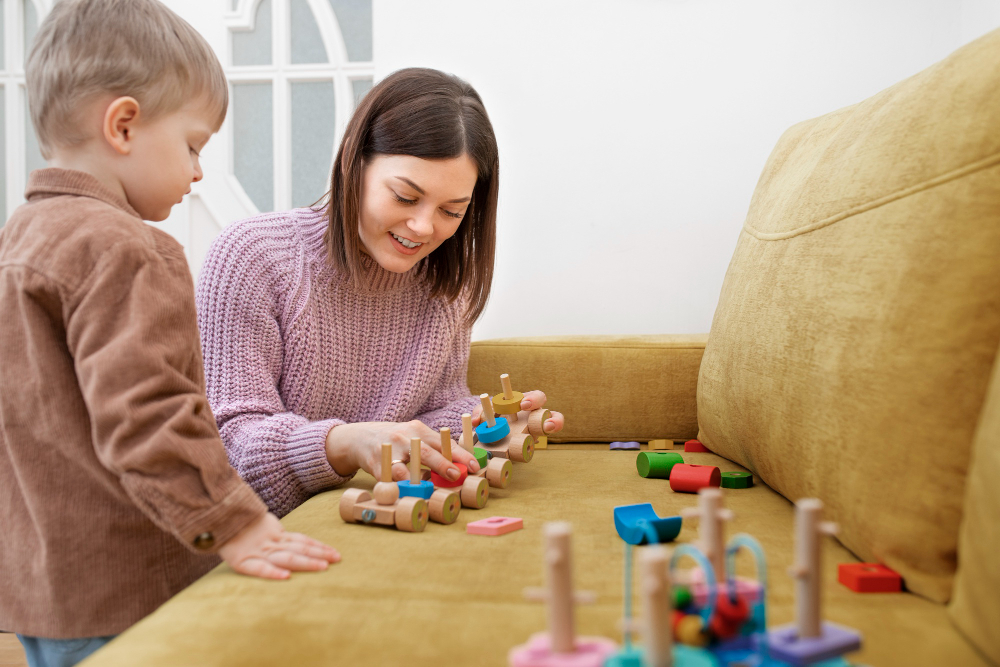
What Is Play Therapy?
Play therapy is a special type of therapy for children. In this approach, children use toys, games, and art to share their feelings. Because children may not have the words to talk about emotions, play therapy gives them another way to express themselves. Many experts use play therapy for children who face stress, sadness, or trouble at home or school. Often, therapists use this method to help with child emotional development. Play therapy for children can take place in clinics, schools, or private offices. In some cities, you may find play therapy services close to home.
How Play Therapy Helps Children Express Emotions
Children often show their feelings through play. For example, a child might use dolls to act out a family argument. Through play, children can show anger, fear, or sadness in a safe way. In fact, many children feel more comfortable sharing feelings with toys than with words. Because play is natural for children, it helps them relax and open up. As a result, therapists can better understand what a child is feeling. Over time, play therapy helps children learn to name and manage their emotions. This process supports healthy child emotional development.
Common Techniques Used in Play Therapy
Therapists use many different techniques in play therapy for children. Each method helps children express feelings in a unique way. For instance, some common techniques include:
Because every child is different, therapists choose techniques that fit each child’s needs.
Signs a Child May Benefit from Play Therapy
Sometimes, children need extra help to deal with strong emotions. For example, you might notice these signs:
If you see these signs, play therapy may help your child express feelings in a safe and healthy way.
The Role of the Therapist and Parents
In play therapy, the therapist guides the sessions and creates a safe space for the child. First, the therapist observes how the child plays and listens to their stories. Then, the therapist helps the child understand and manage their feelings. Parents also play an important role. For example, therapists may meet with parents to share progress and offer advice. Sometimes, parents join sessions to support their child. Working together, therapists and parents help children grow and heal.
Evidence and Research Supporting Play Therapy
Many studies show that play therapy for children is effective. According to the American Psychological Association, play therapy can reduce anxiety, sadness, and behavior problems. In addition, research published in peer-reviewed journals shows that children who attend play therapy often improve in school and at home. Because of this strong evidence, play therapy is widely used by mental health professionals.
Tips for Supporting Emotional Expression at Home
Parents can help children express feelings at home, too. Here are some simple tips:
Although play therapy is best led by a trained therapist, these steps can support your child’s emotional growth at home.
Conclusion
If you feel your child could benefit from extra support, reach out to Bliv child development centre. Our team is here to help your child express feelings and build emotional strength through play.